Showing posts with label news; journalism. Show all posts

Friday, September 10, 2010

The Ipad and News


Every cloud has a silver lining say cloud salesmen, and one side effect of my foot disease (see previous post if your stomach is strong) has been the opportunity to upgrade the apps on my ipad. Naturally there's no shortage of ipad app reviews on the net but I don't see any reason for me not to add mine, together with some thoughts about my experience so far with this allegedly 'magical and revolutionary' device. To start with I'll deal with the device's Operating System and news apps, with the rider that this is very much a personal view, and in no way my employers.

First the OS. While the user experience is smooth and apps burst forth onto the screen in a generally fabulous manner, the tweaking which is due in November cannot come too soon for me. The obvious absence from the original release is multi tasking. It really beggars belief that Apple think its users will be content only doing one thing at once. Even the most basic £200 netbook runs things in the background. A machine which costs up to three times this amount should have had that ability as standard from the off.

But I have become reconciled to the lack of Flash. Its absence is not as crippling as the critics suggest and much web video development is now in the new ipad friendly h.264. But another thing that my £200 netbook can do is print documents and the ipad cannot do this off its own bat. These omissions are irksome, but again will be sorted come the Autumn, so it is said.

The big switch with ipad and news is one of power, which has moved away from journalists and towards their readers listeners and viewers. There's now an abundance of choice which is accessible via the web and the many apps, but the apps themselves allow the user to choose news priorities and sources. Added to that is the flexibility with the ease of display and it's easy to see how the real fight for survival traditional news providers already have is going to intensify as tablet use takes off.

For there are some great news orientated things to use with the ipad which has made it my favourite device around the house and work and has rendered the idea of leaving the building to actually buy a magazine or newspaper superfluous. Chief among them is flipboard which makes your Twitter and Facebook feeds into a delightful colourful magazine which you can flip through, as the app title suggests. This app really does take advantage of the tablet's display and touchscreen in an impressive way, and hints at the future of magazines and media generally. For with Flipboard you are the editor, choosing sources of information which display in the order you want. As well as social networking the app allows you to display blogs and some magazines web feeds in the same way. This app in itself could be very bad news indeed for conventional magazines. It's free, by the way.

I'm a fan of the Metro newspapers ipad and iphone app. The Metro lies about on Tube trains and is a rubbishy pest which puts people off buying proper papers. But it works well online, loading down into the ipad the full newspaper imagery, which you can blow up with your fingers as you would a webpage. For a free app it's very versatile, even allowing you to choose your background music from the ipod app as you browse the stories. It even includes the Metro's magazine. And you can download the paper to read later, when for example, you're on the tube and so offline. Great.

But other magazines and newspapers are struggling with the ipad's challenge. Maclife comes close to getting something worth having; it's free and worthwhile if you like your geekery apple shaped. Other techy print merchants are having a go too; Wired has done a demo version for the ipad which is well worth a look, but I can't see how to buy other editions from the app store or even see how much they'd be. I wouldn't pay more than 50p for it since the ipad means the publisher has neither to pay for printing or distribution, but at the moment the business of selling the magazine electronically seems to elude them. Which is ironic when you consider Wired's speciality.

The electronic media has adapted much more quickly and easily to the ipad and here I have to bow the knee to my employer which has issued the natty free BBC news app which has boasted over a million downloads to date. There's an array of text and video treatment of stories from the various World Specialist and UK fields, together with a video feed of the news channel when you're within wifi range. And yet there are odd omissions. Why no way to listen to Radio 4's PM or Today through the app? Or select Five Live's news offerings? Radio generally doesn't get a look in. And I can't see how to search. And unaccountably there doesn't seem to be a way to send stories to the BBC through the app. Sky News has an iphone app which does allow users to interact, and which translates to the ipad from the iphone quite well, but it's not custom built for the bigger screen so the stories have a pixelly feel.

There are other news apps on the platform which are highly professional in feel. Reuters has a beautiful news ipad app - it's called the news pro - which is the best presented news effort on the platform combing the cream of their written journalism with their stills photography and video. Sumptuous and free. Their competition in the agency business, Associated Press has also delivered an accomplished app which showcases their stories and video. It's a little too US dominated for my personal taste however and there's a plan to sell its content through the app. So far though, it's free.

Other news providers are experimenting with the ipad interface and offering things which are plain gimmicky, like the US TV channel's abc's news globe - it gives you the stories in a globe which you can revolve and touch to make stories leap out, which is pretty but ultimately pales beside the Reuters or BBC's approach which may be duller but allows for a quicker and more efficient browse. I also like Newsy which sources US news outlets for pictures and treatment of stoies, and allows you to build your own running order. TV bulletin editors watch out. Pulse was initially quite interesting - infact it was so interesting publishers initially managed to get Apple to remove it from the app store - but I now find I less compulsive than Flipboard. Pulse just displays stories from other people's websites in moveable rows, which is a swift way to assess coverage but which is visually less than appealing. Again, you can choose your sources, as you can with Flipboard. And it would be wrong not to mention the NPR app which is a magnificent way to access the US public radio output and which the Beeb would do well to have a good long look at.

So my news addiction is well catered for , but other media efforts are less compulsive. The Guardian has an excellent iphone app, but has yet to revise it properly for the ipad. Instead they send you a photo a day through their eyewitness app, which while worthy is scarcely competition for the other news providers. I was recommended Newsrack, which is an ipad RSS reader but its workings have eluded me so far, my fault I suspect. Some iphone news apps have been installed on my ipad and get used, most notably the excellent Manchester Evening News and the Evening Standard, but hurry up chaps, please do a bespoke ipad effort for this journalist.

Of course there are many other news apps. I have found the Wall Street Journal too demanding of both money and e-mail details to be compulsive, the New York Times has yet to update its iphone offering for the ipad, preferring a patrician 'Editor's Choice' effort, so wholly missing the point of the power switch that's occurred - we as consumers have the choice now, not the editors.

My next post will cover my take on social networking on the ipad, and also look at games if I get time.

Monday, June 29, 2009

Bodyguard of Lies

Last November an American journalist working for the New York Times was kidnapped by the Taliban. David Rohde was staring death in the face and his employers asked media organisations not to say anything about it. They reasoned that Rohde's release price would rise if his plight was publicised, and the fuss would hinder negotiations for his freedom. They even got Wikipedia on side, altering the way it showed Rohde's reporting record, but this didn't stop an anonymous user from Florida from trying to amend the site to show the journalist's imprisonment.

Rohde escaped by climbing over a wall earlier this month, and now we can have the debate about the rightness of the cover up. Me I support it, and feel that wikipedia user in Florida was a priggish menace. The NYT piece about this quandary is here.

Friday, May 29, 2009

A widdyam

The ongoing expenses story has coincided with half term so I was drafted in to help our team at Westminster. I arrived shortly after Julie Kirkbride and Margaret Moran had decided to step down. It was organised mayhem with the phone ringing all the time and reporters flitting around in front of cameras and radio microphones. It's been years since I worked at Millbank so I was, to put it tactfully, on the steep bit of the learning curve. I'd forgotten how fast moving political events can be and how vital it is to stay on top of the detail.

A couple of hours into this a colleague turns round to me.
Colleague: "Obviously we'll need to do a Widdyam."
Hendo: "?"
Colleague: "A Widdyam"
Hendo: "Erm.."
Colleague: "Yes, a 'What Does It All Mean'"

Light Dawns.

So now you know, when you watch the news and you see the top piece saying what's happened and then you see a second item all about the first, it's a Widdyam.

Saturday, May 16, 2009

Scandal Pizza


For the last week the revelations involving the MPs expenses has turned the news cycle into a kind of Groundhog Day involving the scrutiny of the Daily Telegraph's website, late night repositioning of satellite trucks, cameras and correspondents, and then a race to keep up with a frantic pace of political development. People are obviously very angry indeed, but being a hack you see things slightly differently in that what's going on is revelation on top of revelation, an incredibly swift moving news story, and that's coupled with a realisation that politics in this country is never going to be the same again.
I've got a kind of thought-pizza about what's been going on.
First, the state of the economy has fuelled the sense of outrage we saw on Question Time on Thursday night. People are really up against it and that's added to the bruised feeling. Would it have been as bad for MP's if we weren't looking at spiralling unemployment? I don't know. Maybe.
Secondly, Stephen Fry missed it when he was asked about the row:
"Anybody can talk about snouts in troughs, and go on about it, for journalists to do so is almost beyond belief, beyond belief.
I know lots of journalists; I know more journalists than I know politicians.
And I’ve never met a more venal and disgusting crowd of people when it comes to expenses and allowances. "
He must know different journalists than I do although the Guardian's Ian Jack admits Fry has a point, or at least he did do when journalist's employers had some money.
Because (lastly) I'm lost in admiration for quite a few of the ones I do know, and this week I've been learning more about journo-campaigner Heather Brooke whose single minded and courageous exploitation of Freedom of Information law has led to this week's events. She's written a superb piece about the long legal battle she fought to wheedle the disclosures out of the authorities only to be beaten by the Telegraph at the last hurdle. The moral victory belongs to her at any rate.

Thursday, March 19, 2009

This Is Not A Game

I had lunch with Adrian Monck, who now lectures in journalism, a few months ago. And I'm sure I asked him then why he left TV news. I think he may have glossed over it at the time, for it seems that this is the reason, and it must surely rank as the bravest blogpost of the year.

Tuesday, March 10, 2009

Drained

Two nightshifts punctuated by depressing news from Northern Ireland. But at least I was supposed to be on duty. When the first shootings happened a certain correspondent (I could name him but won't) abandoned a family holiday and turned in an apparently endless series of packages and two ways. Our coverage of these distressing events has been first class as a result and I am proud to have a played a minor role in it.

Wednesday, February 25, 2009

Surreal is the right term for this experience

There's no doubt Twitter is changing journalism, but to my mind, only on certain types of story..and these are the mass event kind of stories when someone in the crowd of people involved and witnessing it starts tweeting.

And the cloud of tweeters range in on sources like @Nipp who was next to the tragic plane crash in Amsterdam this morning, and who finished the day with nearly nine hundred new followers and a line of interviews with news channels. As he said, surreal is the right term for this experience.

But twitter doesn't change all stories. I had a look for twitter coverage of the Financial Service Authority appearance in front of the Commons Treasury select committee this afternoon. It's pretty sparse, very partisan and tends to link to those 'old fashioned established news sources'. So for stories about one of the most interesting things to happen today it seems you still need a proper journalist.

Monday, February 02, 2009

The Big Freeze

From 2009-02-02 Snow020209


I had it kicked (almost literally) into me at ITN that no TV news editor can under respond to a weather story. So it was all hands to the pumps when the Russian climate came calling to South and East England late last night, and with yours truly on the night shift.

Last night taught me two things: the internet has changed our journalism and infinitely for the better. I was getting tweets about where the snow was, a producer at Gatwick Airport conducted vox pops of frustrated passengers on her phone, and of course there was a pile of imagery and video from members of the public.

The other is the fragility of our planning when communications get disrupted; ultimately you cannot send a satellite truck anywhere if the engineer who drives it is stuck on a train near Sevenoaks. Which is where the lesson above comes in.

Update: By 1700 Monday the BBC had received over 24,000 stills of snow sent by the British public.

Sunday, May 11, 2008

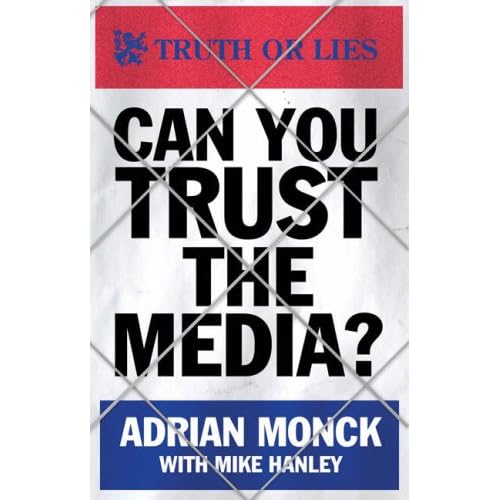
Can You Trust the Media


When you're a tiny hermit crab in the media rock pool it's sometimes hard to grasp the bigger debate. Why are we in this pool anyway? Why does that starfish look so different from me, a little hermit crab? How long will this pool last anyway, and is that rushing sound the tide coming in? That's why it's good to have books like Adrian Monck and Mike Hanley's 'Can We Trust the Media?'. They help you take your mind off the search for the next piece of plankton.

Back in the day Adrian was a bigger and faster fish in my pool; a producer of Special Reports for News At Ten before I did the job, then off to Five News where he was Managing Editor for some time; now he's at the City University where he lectures in journalism. I flinch to think what he teaches, because his book is no advert for our trade. Instead it is a slick exposition of everything that is wrong with the way the media operates in this country, and in one or two others.

Reading it as one who works in 'the media' I was first slightly ashamed, then appalled. Can we get anything right? It is a catalogue of venal editorial sin, ranging from a brief and effective summary of the Gilligan disaster on the 'Today' programme to the Sun's shameless nonsense about a Great White Shark off Cornwall. Hardly any horrid breach of faith is left undisturbed. Not content with the wickedness of ourselves on this side of the pond the authors even go Stateside to discuss the case of Jayson Blair, who used to make up entire stories for the New York Times. It's all deeply humbling. And in fairness Adrian doesn't spare himself; an incident in which he gave money to joyriders is related and (gleefully) so is another incident in which he stitched up the BNP live on Five News.

No academic dry text this, instead there's lots here to interest and entertain; especially if you like well informed material about how the media operates. A concise account of Silvio Berlusconi's rise to power is accompanied by a quick flashback to ancient Greece, for example. There can't be much wrong with a book which has both Plato and Piers Morgan in the index; the narrative jumps around healthily and has plenty of Zap and Pow.

But the authors' vision is of a media that pretends to be trustworthy in order to somehow cheat people of their attention, and so the book ends up as an analysis which borders on the cynical. "All news involves some form of artifice" they say. (Chapter 5, P91). The expansion of television news has simply "allowed people the convenience of opting out." (P63 in a chapter headed 'Media Bulimia'. You get the picture). It is an unremittingly negative account and if I was to take it to heart I'd never get up in the morning (or work all night, for that matter).

There's a bit missing; the portion where Adrian and his co-author could point the way ahead, to the bright shining uplands of re-establishing a better contract between media producer and consumer. In my opinion the web means that's already well on the way to being negotiated, with bloggers and comment redefining all kinds of coverage in an enormously exciting way. But that isn't here and I'm sure that's a deliberate omission; there is no way ahead in their world view, there can only be more denuding of any authority the media has and a gentle drifting away of audiences and revenue. I don't agree. I think the party's just starting.

Wednesday, April 30, 2008

Trusting Them


To the City where my colleague Adrian Monck held a debate to promote his book 'Can You Trust the Media?'. The audience was filled with hacks who attacked Adrian for his cynicism. His book apparently suggests that the entire concept of trustworthy media was invented by the owners of printing presses in order to promote their wicked plans to sell tracts of 'journalism' to the masses along with pots of Yoghurt.
Andrew Gilligan, who if the Mayor of London is changed tomorrow can definitely claim a big degree of responsibility, was there and disagreed strongly with the author. Inevitably Gilligan's own journalism came under attack from his fellow panellist the Guardian columnist Yasmin Alibhi Brown who felt he really shouldn't have published Lee Jaspar's naughty e-mails.
It was all immensely entertaining. I am not clear about Adrians' arguments though, so I bought a copy and he thoughtfully signed it. He is a good egg, as my Dad would say.
Posted by Picasa